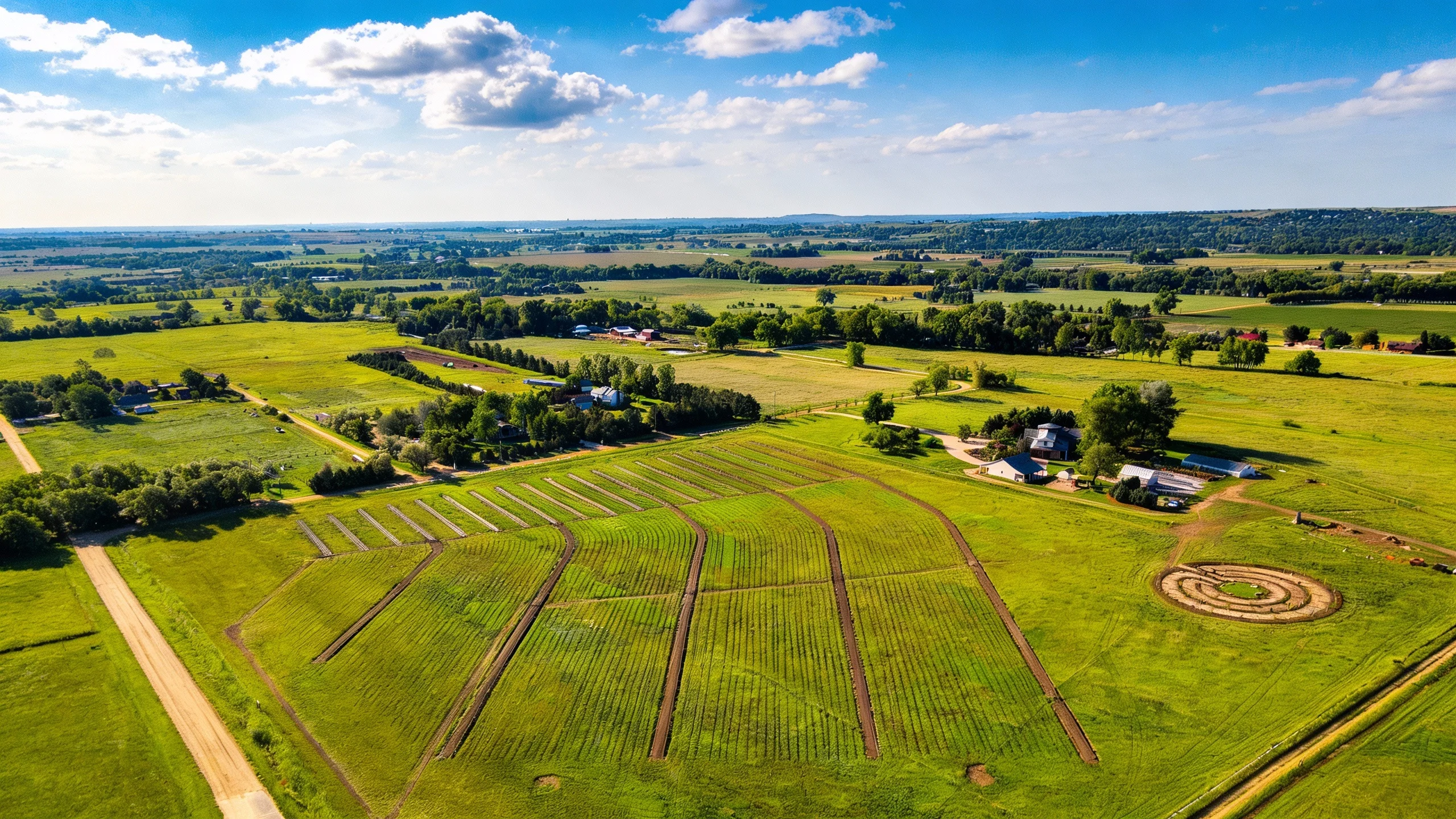


Water Systems Restoration
We conduct a structured land and water assessment
analyzing topography, runoff patterns, soils, climate pressures, and existing landform dynamics.
We align site realities with your long-term land objectives
production, resilience, asset protection, or legacy performance.
We develop a property-specific water strategy
engineered to slow, spread, sink, and store rainfall without degrading soil function.
We design a phased implementation roadmap
sequencing interventions to protect capital, manage risk, and build measurable land performance over tim
Soil Assessment
Rainfed agriculture is not failing solely because of drought. It is failing because soils have lost their ability to absorb, buffer, and retain rainfall.
Across semi-arid regions, the pattern is consistent: extended dry periods followed by short, high-intensity storm events. The damage comes not only from drought or flooding, but from degraded soil structure and the loss of buffering capacity: the “soil sponge.”
Our Soil Assessment evaluates:
- Soil structure, aggregation, and organic matter condition
- Soil temperature patterns and exposure
- Biodiversity indicators above and below ground
- Rooting depth and compaction constraints
Sky to Soil develops strategies that rebuild soil structure, restore infiltration, and increase water-holding capacity, creating a functioning soil sponge that performs under real weather variability.
Increasing infiltration
- Capture more rainfall in your soil and hold it in the root zone where plants can access it longer.
- Distribute water more evenly across pastures to reduce runoff, erosion, and dry patches.
- Long term performance depends less on how much rain you receive and more on how many times that water cycles through your soil before it leaves your property.
Home Rainwater Harvesting
- Integrate active and passive rainwater systems to capture and utilize rainfall efficiently.
- Harvest runoff from roofs and built structures to increase on-site water security.
- Supply stored and infiltrated rainwater for household and landscape needs where appropriate.
- Reduce reliance on municipal or well water and lower long-term irrigation costs through intentional water capture and distribution.
Treating the Catchment Area
- Relieve compaction through precision subsoil intervention to restore vertical water movement and root penetration.
- Establish perennial plant systems aligned with your production, ecological, and long-term land performance goals.
- Increase vegetative cover and soil hydration across the landscape to reduce bare ground and improve microclimate stability.
- Promote deep rooting and diverse biological activity to strengthen soil structure and long-term water retention.
- Reconnect disrupted water pathways to restore natural flow patterns across the property.
- Develop appropriately scaled retention and detention areas where needed to stabilize runoff and reduce downstream risk.